



What is the Pediatric Autism Research Cohort (PARC) Study?
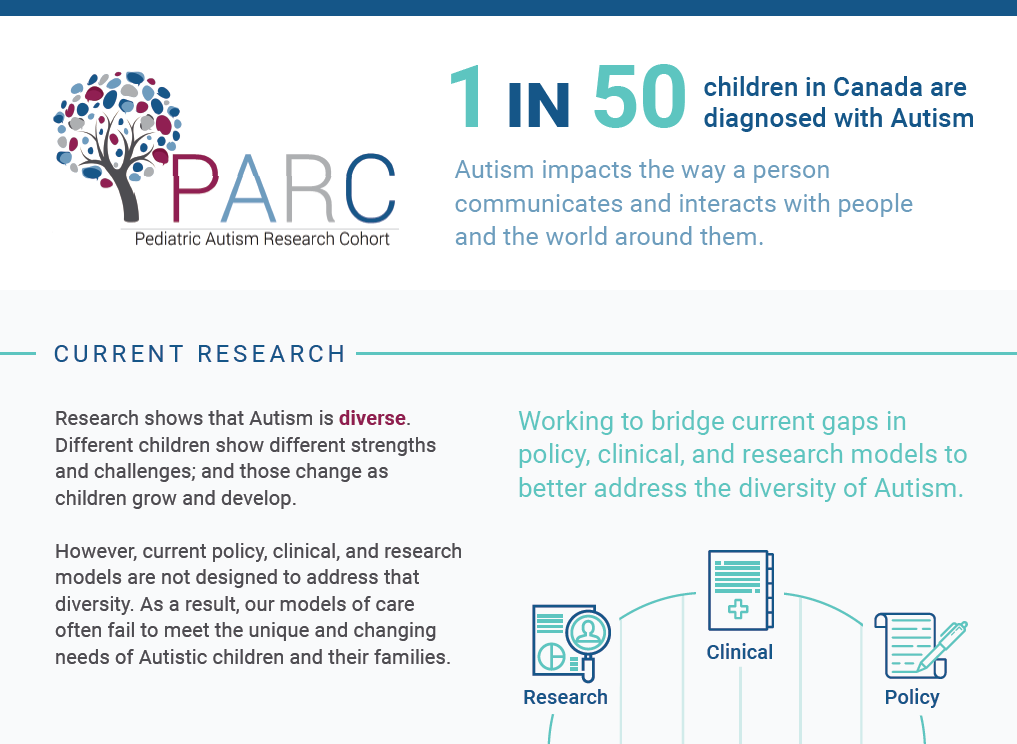
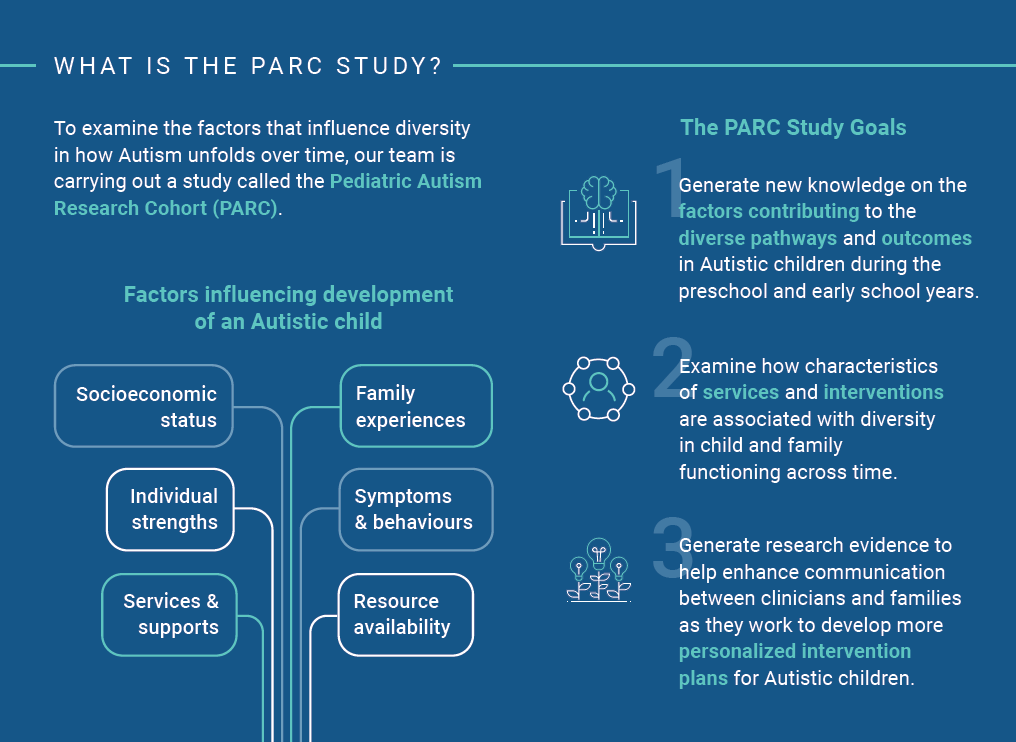
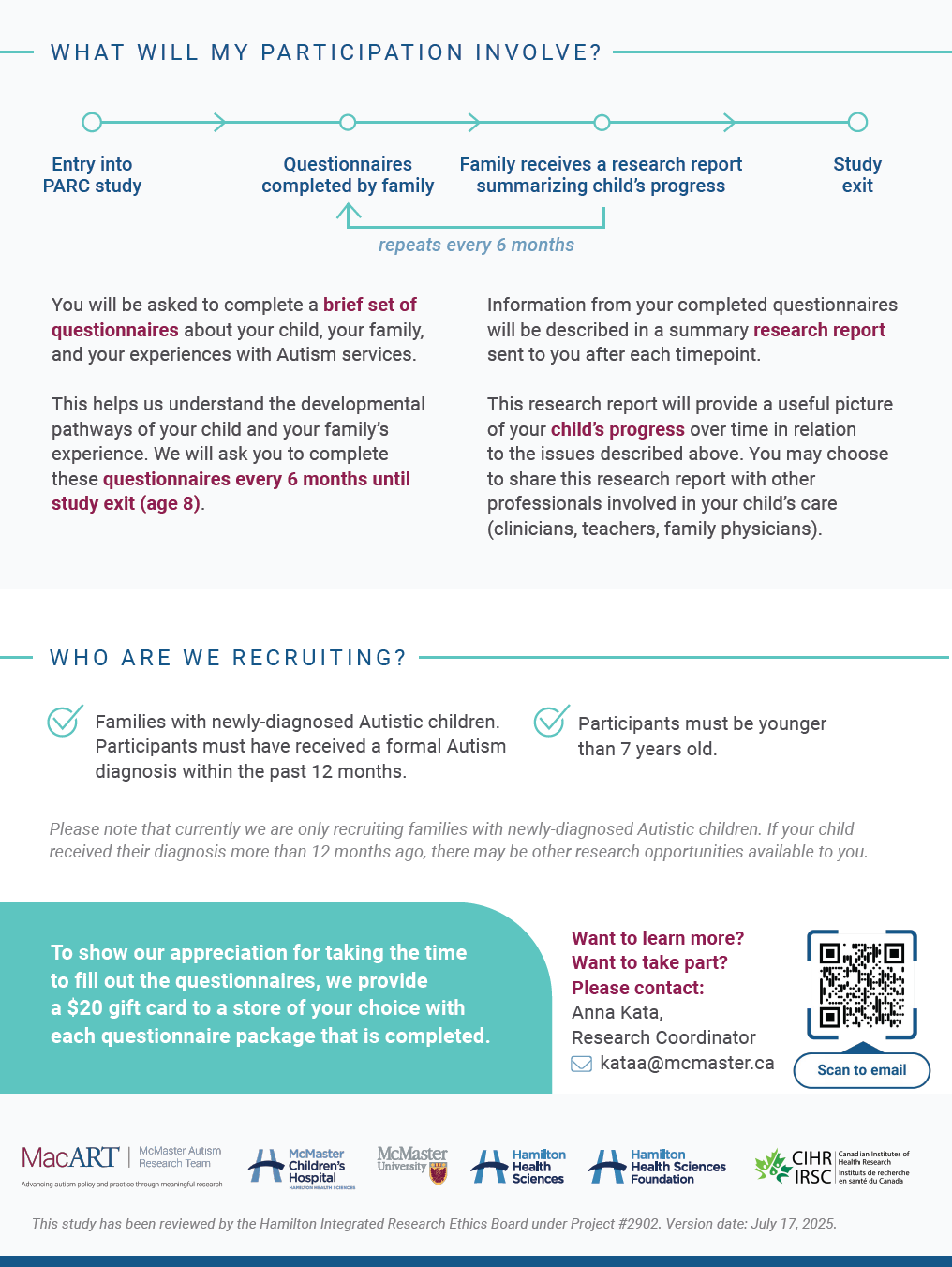
The PARC Study is a longitudinal cohort study that explores developmental trajectories in Autistic children as they are followed over time. The team aims to map developmental pathways and influences on child and family outcomes by examining various aspects such as the child’s abilities and functioning, their family life, the services they receive, and their environment. This is a multisite study in 4 provinces, following newly diagnosed Autistic children during the key early years and into entry to school. This includes children under age 7, until they turn age 8.
Why is the PARC Study important?

Why is the PARC Study important?

Who will PARC Study findings impact?
The PARC Study aims to recruit hundreds of children across the country, making it possible to generate strong research evidence about newly diagnosed Autistic children. The variety of data being gathered from participants – about a child’s symptoms, abilities, family characteristics and experiences, participation at home, school, and in the community, and more – means there are many research findings that can stem from this work.
At its core, this project strives to explore developmental pathways and find ways to predict differences in children’s trajectories. This is important for both the child and their family, but also for anyone else who may be involved in their care: clinicians and service providers, service providers, policymakers, and so on. Therefore, this study has the potential to create impactful change in how we improve personalized supports for Autistic children and their families as each child develops over time.
Attributions:
- “Collaboration” by Adinda Diah Pramesti from Noun Project (CC BY 3.0)
- “Handshake” by emkamal kamaluddin from Noun Project (CC BY 3.0)
- “Happy Family” by Suncheli Project from Noun Project (CC BY 3.0)
- “Gear” by Malikov from Noun Project (CC BY 3.0)
- “Aging” by Adrien Coquet from Noun Project (CC BY 3.0)
- “Kindergarten” by Gan Khoon Lay from Noun Project (CC BY 3.0)